How the UAS Multi-Site Policy Playbook Maps Onto Autonomous Mobile Robots Moving Between Warehouses and Client Locations
Drone insurance's layered model fits robot fleets, with gaps.
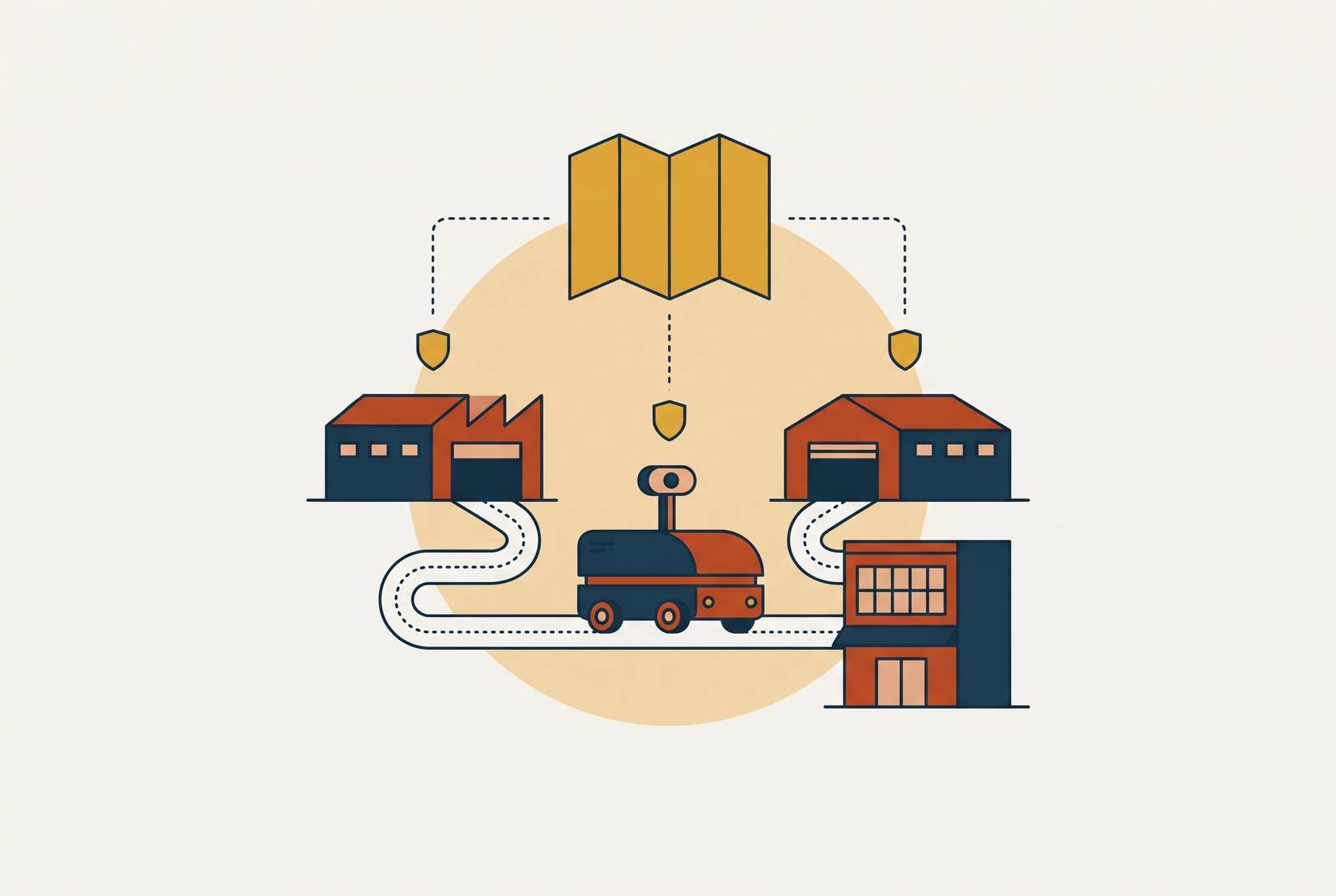
Inland marine coverage for deployed robot fleets covers the hardware as it moves between warehouses and client locations, within the policy’s location and transit terms. It belongs in a layered program with liability coverage and explicit treatment of autonomous operation. The UAS multi-site playbook provides that architecture, but an AMR submission must describe how the machines actually move, operate and change across sites.
Why AMR operators are inheriting a problem the drone world already solved
Physical AI systems use sensors, software and onboard models to decide how to act as conditions change. Insurance written for static, human-operated equipment can struggle to fit these systems because where they work and what people do can both change. Drone operators encountered this mismatch before multi-site AMR deployments did. The drone industry had to build programs around the actual exposure rather than accept generic descriptions that excluded or misrepresented it.
AMR operators now face the same mismatch at ground level. Their machines move between warehouse floors, loading docks, client facilities and, in some deployments, public roads. Each boundary can introduce a different liability regime or certificate requirement. A program designed around the operator’s own premises cannot describe all those exposures. The UAS precedent provides a way to organize them without treating every relocation as an unrelated insurance problem.
What the UAS multi-site policy structure actually looks like, layer by layer
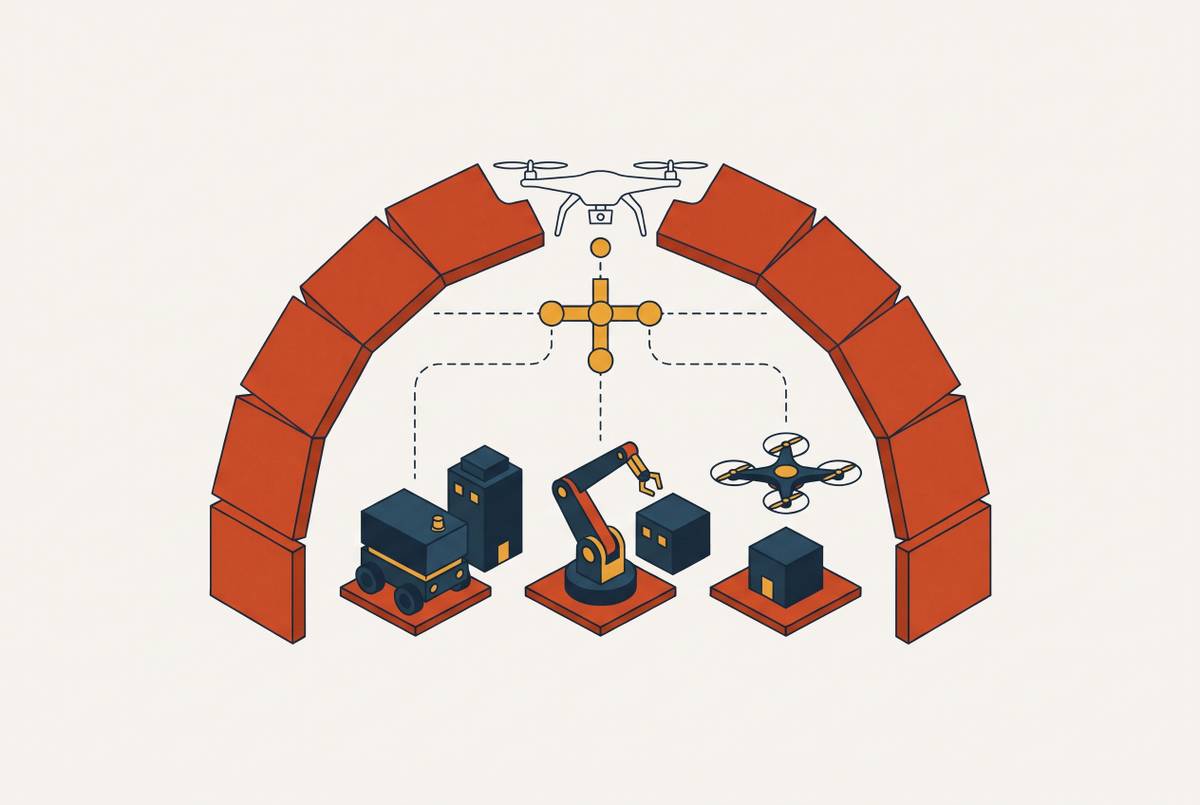
General liability anchors the UAS program because machines working around people and infrastructure can cause bodily injury and damage to third-party property. Site owners require proof of that protection before deployment. Equipment coverage serves a different purpose entirely. Location-flexible inland marine protects the hardware as it moves beyond the operator’s premises, closing the gap left by property coverage tied to a fixed location. These layers distinguish damage caused by the machine from damage to the machine itself.
Autonomous-operation endorsements bring policy language written for manually operated systems into line with how the machines are used. Some policies restrict or exclude fully autonomous operation. An explicit endorsement addresses that restriction rather than leaving the operator to discover it after a loss. Third-party component coverage addresses another break in the chain, where a defective sensor or perception module produces a claim against the integrating company. The program cannot simply assume the hardware manufacturer’s insurance will respond.
Tech E&O covers risks from the autonomy software or services the business sells or licenses. Cyber coverage adds protection for networked-fleet exposures that the other lines may not reach. A GPS spoofing attack or ransomware incident that disables a fleet may fall outside standard liability and equipment terms. The architecture therefore depends on how the lines fit together.
Where the UAS architecture maps cleanly onto AMR multi-site deployments
Inland marine fits deployed AMR hardware because the machines spend their working lives outside the operator’s own walls. A robot may be in transit between warehouses, staged at a client dock or operating on a client floor. A single-site property policy does not follow that working life. Location-flexible equipment coverage is therefore a core requirement. Its role is to protect the fleet across the locations and movements described in the policy.
The liability foundation translates just as directly to AMRs. A machine operating near workers, racking, products and forklifts presents bodily injury and third-party property damage exposures. Autonomous-operation terms must match how it decides to move, while component coverage must account for claims the integrating company may face when subvendors fail. None of those needs depends on flight.
Tech E&O also follows the function of the business. When the company sells or licenses a perception model, navigation service or control policy, software logic becomes part of its exposure. A failure can cascade into physical damage or a facility-wide shutdown. General liability alone leaves that software-related exposure open. The same layered approach therefore applies whether the autonomy stack directs a drone or a mobile robot.
Where ground-based autonomy introduces wrinkles the UAS playbook does not fully address
The template needs modification when one fleet operates across different warehouse environments. The same AMR poses different risks when floor layouts, how it works around people and its operating limits change from warehouse to warehouse. Software versions can also diverge between sites after the policy is written. Each location becomes a distinct underwriting question. A blanket certificate may satisfy a request for paperwork without answering how those differences affect the insured exposure.
A robot failure can stop a warehouse line even when no insured equipment has been physically damaged. Standard coverage may address the damaged hardware but not the lost production, or may have no physical loss to trigger a response at all. Robot-specific coverage can address losses from a software update or sensor failure that takes equipment offline.
Enterprise-network integration also expands the cyber-physical attack surface of an AMR fleet. An attack that takes over robot controls or disables connected machines can produce claims that standard liability and equipment lines do not reach. Fault allocation becomes more difficult as well. An onboard model, a third-party sensor and the operator’s configuration may all contribute to an incident involving a worker or facility. Policy language assigning fault exclusively to the named operator may not reflect that causal chain.
AI disclosures introduce a further issue across E&O, D&O and CGL coverage. Insurers seek details about autonomy levels, human oversight and dependence on third-party AI vendors, as well as the business’s use of AI. The classification of the system is consequential. Describing AI as a support tool is different from describing it as an independent operational decision-maker. Incomplete disclosure can put coverage at risk, including rescission after a loss, so the program must describe the system’s actual role.
How the mainstream market is responding — and where the coverage gap still lives
The market is splitting between general policies that limit coverage for AI-related liability and specialist coverage built for autonomous systems. Some carriers have added absolute exclusions to more than one policy line. A familiar CGL label is therefore not sufficient. An AMR operator can have general liability insurance while the policy excludes the autonomous decision-making exposure central to its operations. Generic placement risks overlooking that distinction.
Specialist coverage offers a route to insuring autonomous-robot exposures, but it does not resolve every allocation problem. A single event can generate claims against the hardware maker, software developer and operating company. No single policy spans that entire chain. Coverage for the operator must therefore be read in relation to the roles of the other businesses, rather than treated as a substitute for their insurance.
A flaw in a widely used model can affect businesses across industries and locations at once. Geographic separation does not contain that exposure. Product liability may cover the loss only where the law that applies treats AI software as a product, while financial losses from the same failure may still be uninsured. This leaves a gap that location-portable hardware coverage cannot close.
Why the underwriting submission is the mechanism that determines which side of the split an AMR operator lands on
Underwriters assessing robot risks use performance evaluation results and usage telemetry to supplement immature actuarial tables. They also look at system specifications, safeguards and the sector where the robots work when they set rates. Those inputs permit differentiation between higher- and lower-risk operations. A thin submission removes the evidence needed to make that distinction and pushes the assessment toward restriction or exclusion. The operator controls how much of the real operation reaches the underwriting file.
Koop’s In Bots We Trust report found that companies reporting a safety control pay significantly less per dollar of revenue than those that do not. The report also found that only a small fraction publish a safety page. Documented controls have a clear underwriting role. The finding means that evidence of controls gives the insurer information a generic application may omit. For a multi-site operator, that evidence must describe the safeguards governing the deployments being insured.
The report also found that robot liability premiums had fallen significantly from their 2022 levels, while restrictions remained on a substantial share of robot risks. Exclusions accounted for a smaller share of underwriting decisions than before. The friction has shifted toward terms, which makes the description of autonomy, safeguards and operating conditions central to placement. A low price offers little protection if the policy wording leaves out the loss most likely to occur.
The submission must also account for changes since the policy was last written. Hardware upgrades, new payload systems, larger operating areas, site-specific software versions and changes in data use can each be a change the operator must disclose. The operator can give an accurate account of those changes, backed by the information underwriters use to judge risk. That account connects the proposed coverage to the fleet that will actually operate during the policy period.
How enterprise and government contracts create a parallel insurance obligation AMR operators often miss
Enterprise customers and government prime contractors commonly require proof of insurance before deployment. The minimum limits and required coverage depend on the customer’s exposure and site requirements. Those terms may be in vendor addenda or master service agreements even if they were left out of the main sales discussion. Deployment can be blocked by the paperwork. A program that appears adequate in isolation may still fail to meet the contract governing access to the client’s facility.
Government contracting adds a supply-chain dimension because applicable requirements can flow from a prime contract into subcontracts. AMR operators working as subcontractors may therefore inherit obligations that did not originate in their own sales agreement. Compliance documents can also affect access to insurance. Before publication, specific government flow-down obligations and any claim that regulatory documentation is needed to get insurance must be checked against primary sources. A proposed restriction or a general description of compliance does not prove that an insurance requirement is in force.
Businesses need to assess whether a vendor’s insurance covers AI-related failures and whether its limits are sufficient for the exposure. A certificate alone does not answer either question. Where vendor insurance falls short, contractual indemnification must be assessed as an alternative means of transferring risk. That review connects the operator’s insurance program to the component and software relationships on which its machines depend.
How do you insure a fleet of mobile robots operating across multiple locations?
A submission that treats each deployment location as a distinct operating environment provides the practical starting point. It should identify floor layouts, worker proximity, the software version deployed and the limits governing operation at that site. A generic description of several warehouses loses those distinctions. The site record should also reflect how the machines move between locations, including transit, staging and work on client premises. That is the information needed to align inland marine coverage with the fleet’s actual deployment pattern.
The autonomy documentation should set out the supervision ratios, operating envelopes, geofencing parameters, emergency stop procedures and fail-safe protocols. These are underwriting inputs. Standard forms may provide no field for them, which makes a supporting submission necessary. The record should also capture changes to hardware, payloads, operating areas, AI model versions and collected-data use since the last policy was written. Together, those details show both the present operation and where it has departed from the earlier risk description.
A specialist broker’s role is to translate that operating record into policy terms and place it with insurers whose forms address autonomous operation. That work includes reading the policy before it binds, rather than relying on the coverage labels in a proposal. The distinction is not simply brokerage cost. Commissions are built into the premium whether or not a specialist places the policy. The value lies in making the UAS architecture respond to the AMR fleet’s real movements, controls and contractual obligations, without requiring the operator to become an insurance expert.