Why Pre-Revenue Drone Startups Get Declined on Standard UAS Applications
Insurance applications built for human pilots can't fairly assess autonomous drone startups.
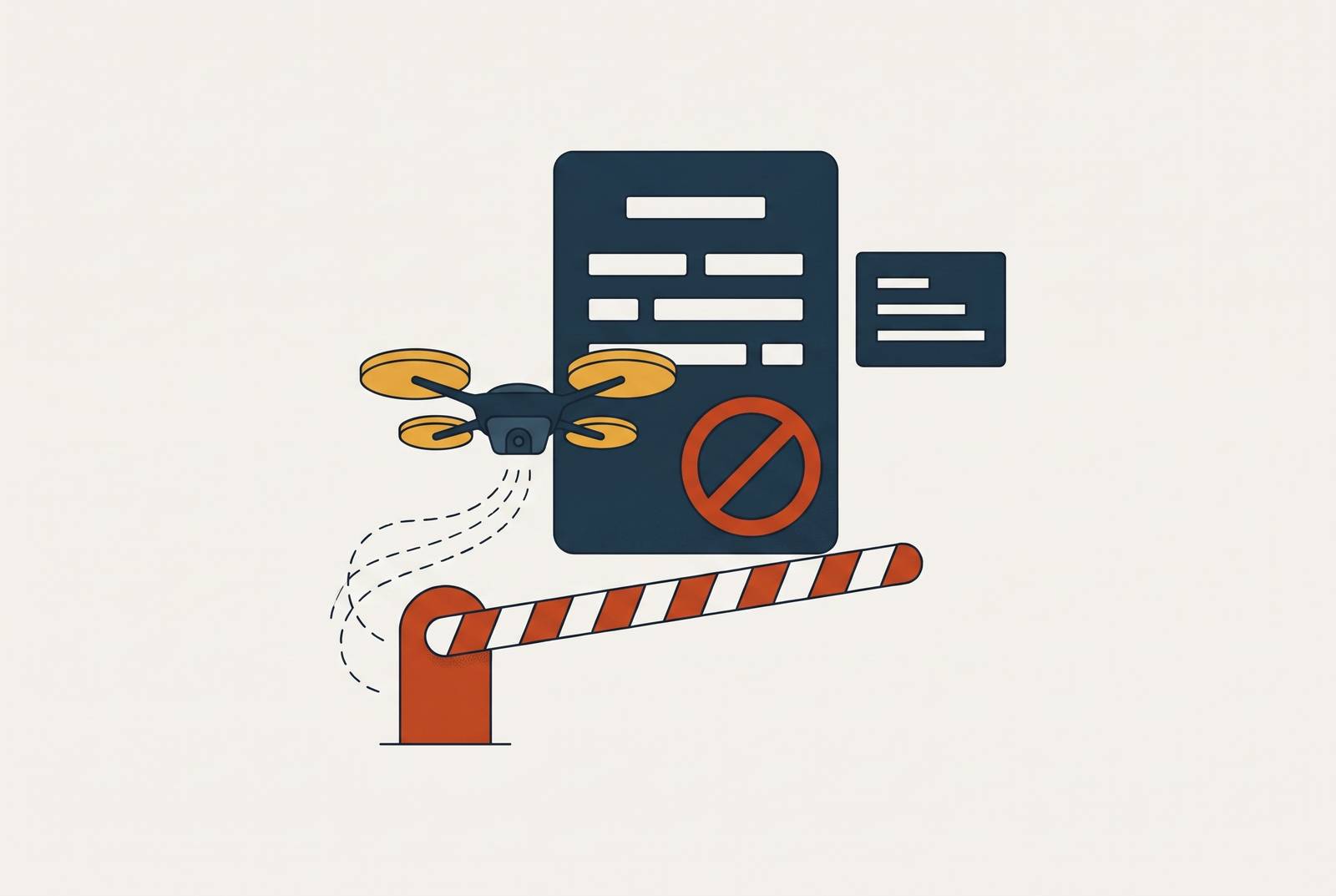
Pre-revenue drone startups get declined on standard UAS applications because the forms assume an established, human-piloted operation. Pre-revenue autonomous vehicle and drone startups need a specialist to underwrite what they actually do. For autonomous UAS companies, that means a submission built around current authorizations, autonomy architecture, equipment, and contract obligations, followed by scrutiny of aircraft and AI exclusions.
What a standard UAS application was built to evaluate
The standard UAS insurance application first asks how long the applicant has been in business, who its present UAS liability insurer is, and when its existing policy expires. It then asks about prior UAS claims or losses and whether an insurer has cancelled, declined, or refused to renew coverage. These fields establish an operating and insurance history.
The USAU Unmanned Aircraft System Insurance Application asks for each operator’s name, Remote Pilot Certificate number, and position as Mission Commander or PIC. It also asks whether all pilots complete annual training. The pilot is the organizing unit of this assessment. The procedures questions extend that framework by asking about a formal written Standard Operating Procedure and who makes the final go/no-go decision.
The Allianz UAV500 form schedules aircraft by Serial Number/ID, Year, Make & Model, and Insured Value, with Annual Hrs listed separately. The standard application also asks for a detailed mission description. Its structure connects identifiable aircraft, human operators, written procedures, and a defined use, giving the underwriter the components of a conventional flight operation.
Why those questions cannot be answered honestly by a pre-revenue autonomous drone company
The fields for business history and the present insurer are hard to interpret when the applicant has been operating for only a short time, has zero revenue, and has never had an aviation policy. The company can state those facts honestly. But the answers do not supply the track record the form expects, and blanks reflecting the startup’s stage can read as warning signs. A company that has never held coverage cannot supply the same evidence as an established insured with no losses.
A company that is developing or testing a new autonomous platform may not yet be able to give a sound estimate of its annual flight hours. A low or speculative estimate leaves the underwriter without a dependable measure of exposure and invites a worst-case interpretation. The mission-description field compounds that uncertainty because developing an autonomous system is not the same mission as conducting commercial operations with it. “Testing” identifies an activity without supplying the operating pattern that legacy aviation actuarial models expect.
The pilot fields leave the autonomy stack undescribed. A small technical team may split remote system control and the role usually assigned to the PIC, while software makes real-time flight decisions. Certificate numbers alone cannot explain that arrangement. Strict internal safety protocols may also fit poorly into an SOP built for human-piloted flights and a standard go/no-go decision. The application makes it hard to tell whether an operation has no controls or has controls that the form has no place for.
The aircraft exclusion problem that sits beneath the application itself
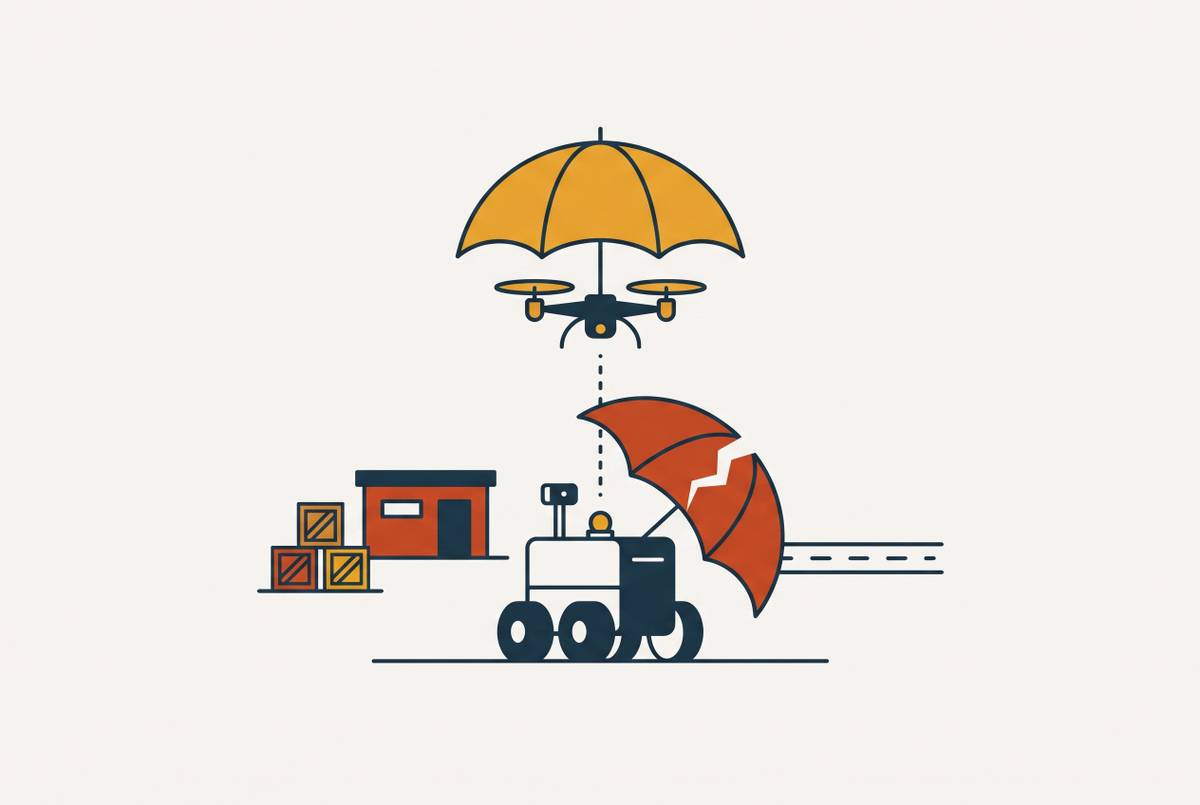
Most commercial general liability policies have an aviation exclusion that was written for traditional aircraft before drones became a commercial exposure. Regulators and insurers treat commercial drones as aircraft, so that exclusion can remove the startup’s core flight liability from its general commercial program. Coverage can sometimes be restored by endorsement. That possibility does not make an unmodified CGL policy a substitute for dedicated aviation liability coverage for commercial drone operations.
Hull coverage creates a separate equipment gap. Scheduling an aircraft and its insured value does not automatically include cameras, LiDAR sensors, or thermal imagers. Those payloads require separate scheduled equipment coverage. When a startup’s payload accounts for most of what its equipment is worth, the aircraft schedule can leave its main asset underinsured. The application mismatch and the policy exclusion are distinct problems, and autonomy adds a third layer through exclusions aimed at the technology itself.
How the 2026 AI exclusion wave adds a third layer of exposure for autonomous UAS companies
ISO/Verisk introduced standardized generative-AI exclusions for commercial general liability in January 2026 through endorsements CG 40 47, CG 40 48, and CG 35 08. CG 40 47 broadly excludes bodily injury, property damage, and personal and advertising injury tied to generative-AI output. CG 40 48 narrows that exclusion to personal and advertising injury. The distinction changes which claims remain within scope. These endorsements add an exclusion question separate from whether the policy responds to aircraft operations.
Carriers have also gone beyond the ISO templates in their D&O, E&O, fiduciary, and corporate policies. The broadest language purports to exclude claims “based upon, arising out of, or attributable to” the actual or alleged use, deployment, or development of artificial intelligence. The operative warning word is “absolute.” For a company whose product is AI-driven autonomy, such wording can remove coverage for the risk at the heart of its technology as well as limit coverage for work at the edges of the business.
Tech E&O is the anchor line for most AI product companies, which makes its treatment of AI particularly consequential. A policy that does not affirmatively address AI may exclude the company’s largest exposure. The declarations page cannot settle that question. A startup can be paying premiums while an endorsement added at renewal, or carrier language broader than the ISO template, has carved out its core technology. Generative-AI wording and broader AI wording therefore require separate attention rather than being treated as interchangeable exclusions.
Verisk’s ISO said on July 10, 2026, that it was evaluating coverage exclusions for agentic AI. This would extend exclusions from generative output to autonomous action. Drones that act without real-time human review are functionally agentic, so this new debate over exclusions affects how pre-revenue autonomous companies operate. For companies building toward BVLOS operations, the prospective restriction also meets an unsettled regulatory framework.
How the BVLOS regulatory gap makes autonomous drone startups unrateable on standard forms
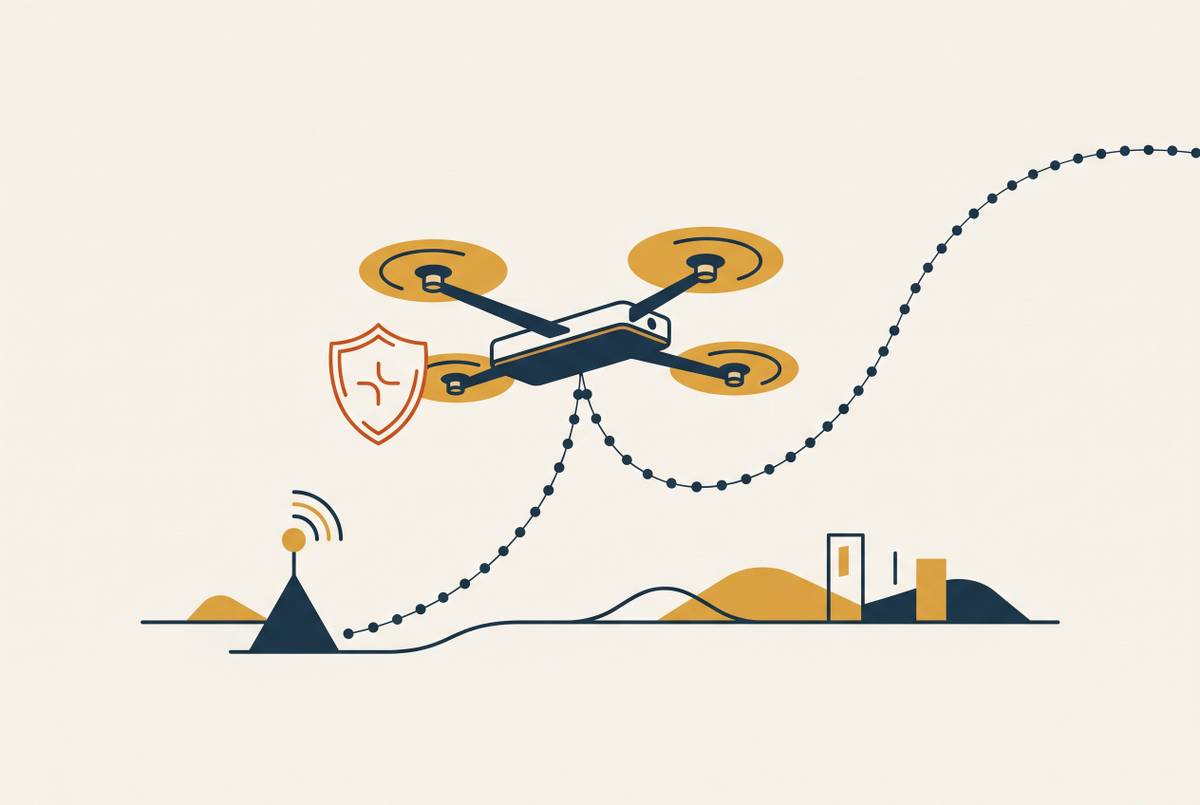
As of September 15, 2026, Part 108 remained a final rule pending review at the federal regulatory review office, OIRA. It was received July 10, 2026, and no final version had been published. There was no settled replacement for the BVLOS patchwork. For underwriting, the consequence is the absence of a stable baseline against which to describe and price the operation, rather than simply uncertainty about a rulemaking date.
In that gap, insurance requirements come from the conditions of the operator’s waiver or exemption, its contracts, and its carrier’s underwriting rules. Any one can impose the strictest requirement. The USAU application asks whether the applicant will operate under a Certificate of Waiver and requests a description or copy. But attaching an authorization is not the same as representing its conditions in a structured risk assessment. The operational constraints and authorized corridors define the exposure more precisely than the existence of a waiver alone.
Standard commercial drone policies are structured for VLOS operations, while BVLOS operations involve substantially higher exposure and can require limits beyond standard policy maximums. A commercial contract may be the first place that shortfall becomes explicit. The risk, however, cannot be priced even before the contract arrives. Without settled rules, actuarial loss data for AI-driven incidents, or fields for waiver conditions, the standard form gives the underwriter no model it can use. When the risk cannot be priced, exclusion replaces a guess.
Where the decline actually happens through contract requirements that expose the coverage gap
A prospective customer’s requirements can reveal that the startup’s existing insurance is inadequate or does not cover the proposed work at all. Commercial contracts typically specify minimum general liability limits, umbrella or excess liability, additional insured status, a waiver of subrogation, and primary-and-non-contributory wording. Those terms do not follow automatically from having a policy. The relevant limits and endorsements have to be deliberately arranged.
The tower-inspection contractor case illustrates this pattern. A utility client required a liability certificate naming the utility as an additional insured, but the operator’s existing policy limit was insufficient. Raising the limit and adding the endorsement substantially increased the annual premium. The requirement changed both coverage and cost at the point of winning work. For a pre-revenue company nearing its first commercial customer, an app-based or standard drone policy may likewise lack the required endorsement language or the depth of underwriting needed, so the certificate gets rejected and the job stalls.
Government and defense contracts add flow-down obligations from the terms the prime contractor negotiated. Government subcontractors usually need professional liability or tech E&O and cyber liability as well as general liability. AI wording creates another potential conflict. A startup can bind a policy containing a generative-AI exclusion while signing a customer contract requiring coverage for “errors or omissions arising from artificial intelligence,” placing it in immediate breach of the contract it has just won.
The startup needs to negotiate terms for its contract before the policy binds. Additional insured status, waiver of subrogation, and primary-and-non-contributory wording belong in that negotiation before work begins. When the startup asks for these terms affects its leverage to get them. Once the contract is signed and the job is under way, the company is seeking coverage against obligations it has already accepted.
How does a drone startup get liability coverage before launch through a submission built for its actual risk?
A submission built for an early-stage autonomous drone company gives a specialist underwriter an operation to price, rather than asking a standard form to stand in for missing history. It records the number of aircraft, their intended uses, and the total value of drones and separately scheduled payloads. Geography is part of that operating description. The submission identifies populated or unpopulated areas, controlled or uncontrolled airspace, and the specific corridors involved. It also presents the operator’s training record and the current FAA authorization with its exact conditions.
The company’s role must be equally explicit. Designing, manufacturing, integrating, operating, and supplying a component create different liability profiles, even when a startup performs more than one of them. A submission that blurs those roles can be underwritten as the riskiest one by default. The recommended approach is to state precisely what the company does and does not do. Being clear about those roles keeps the underwriter from treating what the business hopes to do as a risk it already has.
For BVLOS and autonomous operations, the waiver conditions, airspace authorizations, and autonomy architecture form the underwriting model itself. They must expand the generic description “drone company” into an account of the specific operation in enough detail for a specialist to price it. A business plan cannot do that work. Pre-revenue companies weaken submissions when they describe what they intend to offer without establishing what they are currently authorized and equipped to do. The absence of loss history makes that operational precision more important.
Before binding, a specialist broker reads the coverage page and the policy language to establish whether AI is affirmatively covered or excluded and whether the exclusions remove the proposed operation’s core exposure. Endorsements needed for the contract also belong in this review before binding. Specialist carriers that explicitly cover autonomy exist, but access depends on a submission built for their underwriting. For a startup without an established operator’s history, the route to coverage is a priceable account of the authorized operation.