Hull vs Liability Coverage for Commercial Drone Operators
Separating hull and liability protects your equipment and your business from different angles.
A commercial drone operator buying insurance tends to treat it as one purchase: find a policy, compare the price, move on. That instinct is the problem this piece corrects, because hull coverage and liability coverage are two separate products, built on different underwriting logic, priced against different variables, and sold to cover entirely different kinds of loss. Treating them as one line item produces coverage that is either bloated on the asset side or thin where the operator can least afford it, on the liability side.
Hull and liability are not two versions of the same product
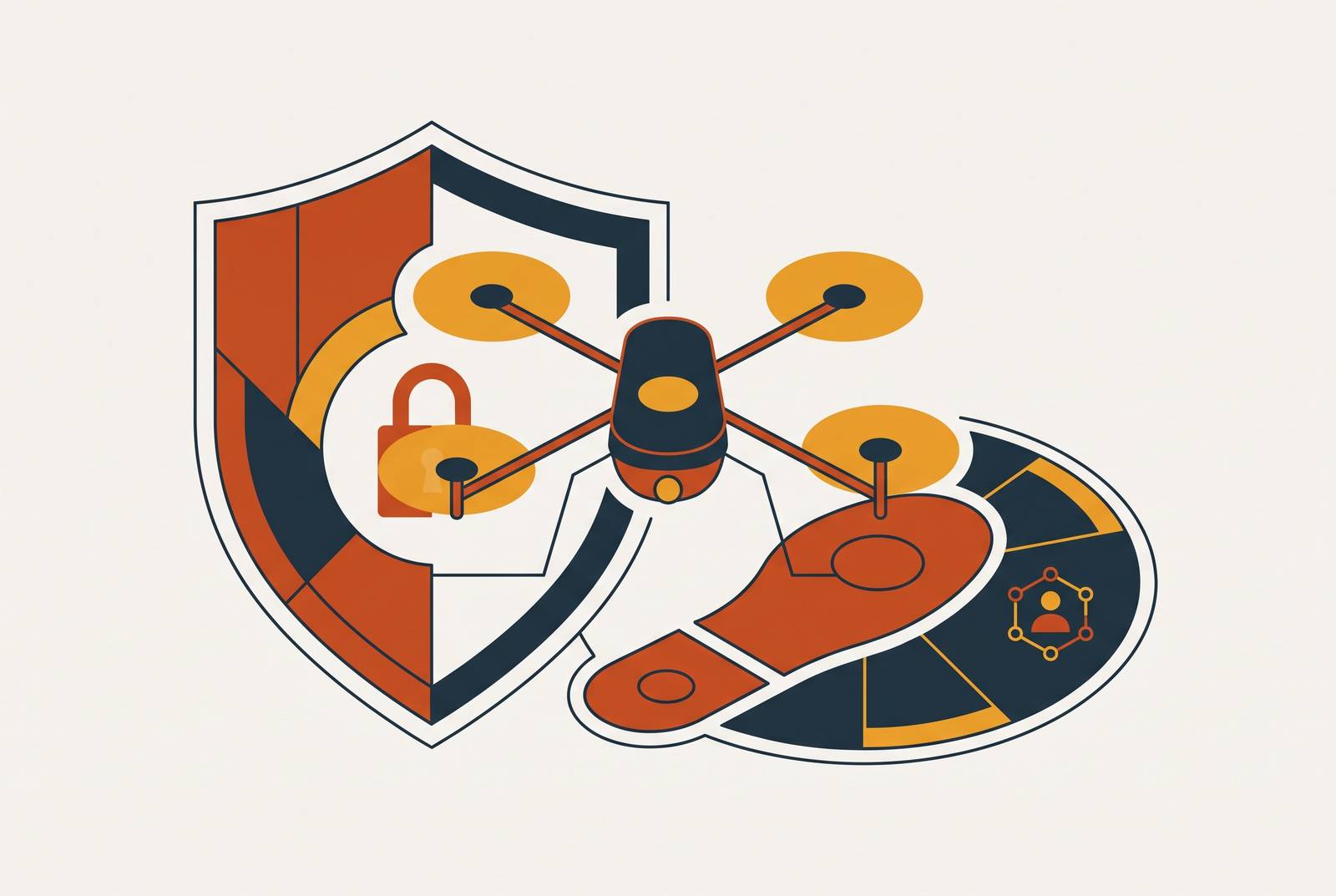
An operator who sets out to "get drone insurance" is already asking the wrong question, because no single product answers it. Hull coverage answers one question: what happens to the aircraft and the equipment on it if it's damaged, stolen, or lost. Liability coverage answers a completely different one: what happens to the operator's finances and legal standing if the drone hurts someone else or damages their property. One of these is inward-facing, protecting the operator's own asset. The other is outward-facing, protecting against claims from the outside world. A coverage strategy built around a single "drone insurance" purchase almost always optimizes for the wrong thing, usually price, instead of asking whether each product is scoped correctly to the risk it's supposed to cover. Commercial operators who conflate hull and liability often end up with coverage that is over-engineered on the equipment they own and dangerously thin on the exposure that could actually put the business at risk. Generic brokers tend to apply the same underwriting forms to autonomous hardware that they'd apply to a forklift or a company car, without separating what protects the asset from what protects against third-party claims. Specialist brokers focused on companies that deploy hardware in the field, Risklytics among them, split the two products apart from the start of the submission, so hull gets scoped to the equipment's actual value and liability gets scoped to the actual third-party exposure, rather than both getting bundled into a single undifferentiated purchase.
How hull coverage works
Hull coverage is priced as a percentage of the drone's declared value, generally running 8 to 12 percent of that value per year. For a moderately priced commercial drone, that works out to an annual premium that's real money but manageable against the cost of the aircraft itself. The number that actually determines what an operator gets paid after a loss is a valuation term most operators never read closely at binding: agreed value versus actual cash value.
Agreed value means the insurer pays the declared value of the drone at the time of loss, full stop, with no depreciation applied. If you require this as an enterprise operator, you're making the right call for anyone flying equipment worth more than a few thousand dollars. Actual cash value works differently: the insurer pays replacement cost minus depreciation. On a drone that's been in service for two years, that depreciation can cut the payout well below what it actually costs to put a new aircraft in the field. An operator who defaults to ACV on a high-value sensor rig doesn't find out what that means until a claim gets filed, at which point the gap between what was expected and what gets paid is no longer theoretical. The valuation terms determine both the premium and the payout architecture, a detail generalist brokers skip but specialist brokers build into the submission from the start.
Hull also covers less than most operators assume. A hull policy insures the airframe, not everything bolted to it. Cameras, LiDAR units, thermal imagers, and other sensors have to be listed separately on the policy to be covered. That matters most for operators flying high-value payloads on relatively modest aircraft: a drone carrying a LiDAR unit worth several times the airframe's value is only partially protected under a standard hull policy, and a crash that destroys both the aircraft and the sensor leaves a large uninsured gap unless the payload was scheduled separately. LiDAR units, multispectral cameras, and thermal imagers all need their own payload coverage, priced apart from the hull premium itself. That gap, airframe insured, payload not, is one of the more common and more avoidable mistakes in how operators structure their coverage, and it sets up a question that matters for the full coverage stack: where equipment like this actually belongs on the policy.
Beyond valuation and payload, several other hull terms change the payout meaningfully and are negotiable at binding: theft coverage, flyaway coverage, water and fire coverage, whether the insurer repairs or replaces damaged equipment, and the deductible level chosen. An operator should not accept any of these as default settings without review.
How liability coverage works for drone operations
Liability insurance for drone operations has to come from an aviation-specific or UAV-specific policy. Most businesses already carry standard commercial general liability policies, and these contain aircraft exclusions that eliminate drone coverage by design. Liability coverage itself covers third-party bodily injury and property damage: if a drone crashes into someone's property or injures a bystander, liability pays the resulting costs and the legal defense that follows.
The policy form itself builds in the exclusion. Standard CGL policies exclude coverage for bodily injury and property damage arising from the ownership, maintenance, or use of aircraft, language written decades before commercial drones existed as a category. The ISO Business Owners form and the Commercial Umbrella form both carry versions of this exclusion, though the two aren't identical: the Umbrella form drops "auto" from its aircraft exclusion language and includes exceptions not found in the Business Owners form. A business paying real annual premiums for general liability coverage gets no protection from a drone-related incident if that policy carries an aviation exclusion, and most do. Standard business property policies compound the problem, because many also exclude aircraft and computers permanently installed in aircraft from coverage. An operator who assumes existing business insurance already covers the drone program is almost certainly wrong, and the fine print catches this on purpose. It's how the policy is written from the start. Because the exclusion is built into the form itself, closing the gap requires a dedicated aviation or UAV liability policy, read by a broker who understands the specific exclusions and endorsements that govern autonomous hardware in the field, a category Risklytics works in directly.
The right liability product covers third-party bodily injury and property damage from flight operations, legal defense costs even against claims with no merit, and in some cases personal injury claims, including privacy-related exposure, though not every aviation liability form includes that last piece by default, so it has to be confirmed. What a drone-specific liability policy doesn't automatically cover matters just as much: cyber liability arising from data the drone collects, professional errors in how mission data gets used, and cargo in transit all sit outside a standard aviation liability form and need their own coverage. On pricing structure, if you fly infrequently you can reasonably choose on-demand coverage paid by the hour, but if you fly regularly for commercial clients, annual policies cost substantially less over a year of operations.
Why the liability decision is harder than the hull decision
Hull coverage is a decision the operator makes alone. Liability coverage is a decision largely made for the operator, by clients, by contracts, and by regulators, and getting it wrong carries consequences that go beyond the insurance itself.
Hull is a straightforward expected-value calculation: weigh the annual premium against the probability and cost of a loss, adjusted for how easily the operator could absorb a replacement cost out of pocket. For a low-cost consumer-grade drone, the math may not favor buying hull coverage. But if you fly expensive enterprise equipment, hull coverage makes clear financial sense. Either way, the operator makes this decision once, at binding, and the only consequence that flows from it is the operator's own financial exposure.
Liability works differently, because the minimum limit an operator needs is set by whoever is hiring them. Clients in film and construction commonly require that the operator name them as an additional insured on the policy, extending coverage to the client for the duration of the job. Construction and utilities work typically demands $2 million to $5 million in liability limits, and if you work in a high-risk industrial environment or near critical infrastructure, that requirement can go substantially higher still. Many of these contracts also require a waiver of subrogation, which prevents the insurer from pursuing the client for recovery even if the client bears some fault, and that waiver has to be endorsed onto the policy before work starts, not negotiated after the fact.
This is where the liability decision turns from an insurance question into a revenue question. If the Certificate of Insurance an operator produces doesn't match what the contract requires, the job doesn't happen. An app-based, self-service insurance product generally can't underwrite to the depth that contract-driven commercial work demands, so if a Certificate of Insurance fails to satisfy a client's specific policy language, no limit on the page will save it. Operators serious about winning contract work need to know what their likely client base will demand before choosing a liability limit, not after a client rejects the paperwork. Under-insuring on liability doesn't just leave an operator exposed to a claim; it can make the business commercially inoperable in sectors where clients hold firm on contract language. That dependence on external, contract-driven requirements is also what makes the liability side of the business harder to plan for as operations scale and change, which is exactly the shift now underway with beyond-visual-line-of-sight flight.
How BVLOS and autonomous functionality change liability exposure
When drones fly beyond visual line of sight, or run with increasing autonomy, they expand third-party liability exposure faster than most current aviation liability policies were built to handle. BVLOS flights extend mission distance and operating complexity, and both the probability and severity of third-party incidents rise with them. Underwriting assumptions built around line-of-sight operations don't transfer cleanly to a BVLOS mission profile.
The regulatory timeline makes clear this shift isn't speculative. The FAA published its proposed Part 108 rule, covering BVLOS operations, on August 7, 2025, with the public comment window closing October 6, 2025. As of late 2026 final publication is still pending: the rule has been under White House OIRA review since July 10, 2026, and the FAA has said it hopes to publish by the end of 2026. Once finalized, Part 108 would replace the current waiver-based approach to BVLOS flight with a scalable regulatory framework, opening the door to far more routine beyond-line-of-sight operations across commercial sectors.
That regulatory shift changes what underwriters ask for. BVLOS underwriters require documentation standard policy applications don't ask for at all: FAA waivers or authorizations, detailed operations manuals, pilot qualification records, equipment specifications and maintenance logs, and a documented risk assessment methodology. When underwriters weigh BVLOS risk, they look at detect-and-avoid capability, redundancy built into critical systems, whether operations run in urban or rural environments, and operational history measured in flight hours. As BVLOS operations become more routine, disputes over aircraft exclusions, professional services exclusions, and cyber-risk provisions are expected to increase, simply because more claims will test language that was written before this kind of flying was common.
Autonomous docking and high-frequency autonomous missions add a separate pressure: drones flying more often with less manual oversight raise utilization, and higher utilization raises the probability of a claim over a given period, changing the risk profile underwriters have to price against. Current aviation liability forms often don't include personal injury, privacy claims, or cyber liability by default, and commercial liability built for autonomous UAS will likely need to be broader than what most forms provide today. Sectors moving toward BVLOS scale, utilities, logistics, rail, and public safety agencies among them, should expect stronger insurance requirements and more complex underwriting conversations before enterprise clients sign off on contracts. Operators planning for scale need to understand this gap while they're still building toward it, not after an incident forces the question.
A complete coverage stack for a commercial drone program
Hull and aviation liability are the floor of a commercial drone program's insurance, not the full structure.
Aviation or UAV liability is the non-negotiable foundation. It covers third-party bodily injury and property damage from flight operations, and most commercial contracts require at least $1 million per occurrence, but higher limits can be set by sector and client demands as described above.
Hull, placed through an inland marine form, covers the aircraft itself on agreed value or actual cash value terms, and the payload is scheduled and priced separately from the airframe. The inland marine form is the right vehicle for scheduling high-value detachable equipment such as LiDAR units, thermal imagers, and multispectral sensors, keeping that equipment properly valued rather than leaving it exposed under a hull policy that only covers the drone body.
Technology errors and omissions coverage protects the software and data layer of the operation. It covers errors or failures in software or in an AI-driven process that cause a client's mission or deliverable to fail, and it matters for any operator whose service depends on processed data, not just on the act of flying. As drones collect and transmit imagery, infrastructure data, and sensor readings that clients rely on to make decisions, this layer of exposure grows alongside the flight operations themselves.
Cyber coverage addresses a different exposure: drone operations generate imagery, personal data, and infrastructure data, and a cyber policy covers the liability and remediation costs if that data is compromised or misused. Standard aviation liability forms almost never address cyber liability, so it needs its own policy or endorsement.
Cargo coverage applies only to delivery operations, so it covers third-party goods in transit against loss or damage during flight. It has no relevance for inspection, mapping, or media-focused operators.
If an operator has raised institutional capital or added independent directors to its board, directors and officers coverage becomes relevant, and it protects those individuals from claims alleging mismanagement or breach of duty.
Taken together, these lines show what a serious commercial drone program needs to carry, well beyond the hull-and-liability pairing most operators start with. Getting the structure right starts with recognizing that hull and liability were never one product to begin with, and that each of the lines built around them exists to close a specific gap the other two don't reach.